Un interessantissimo e stimolante studio geoeconomico di Paola Subacchi ed Helena Huang: “The Connecting Dots of China’s Renminbi Strategy: London and Hong Kong“.
The Connecting Dots of China’s Renminbi Strategy – London and Hong Kong
set
20
Un interessantissimo e stimolante studio geoeconomico di Paola Subacchi ed Helena Huang: “The Connecting Dots of China’s Renminbi Strategy: London and Hong Kong“.
The Connecting Dots of China’s Renminbi Strategy – London and Hong Kong
20 settembre 2012 - 11:16 pm | by Silendo | 1 Comment »
Tags: affari strategici, cina, gran bretagna.
set
19
19 settembre 2012 - 2:00 pm | by Silendo | 9 Comments »
Tags: difesa, francia, germania, gran bretagna, italia.
set
17
L’analisi dello European Council on Foreign Relations: “A Power Audit of EU-North Africa Relations“.
17 settembre 2012 - 10:00 pm | by Silendo | No Comments »
Tags: algeria, egitto, francia, germania, gran bretagna, italia, libia, medio-oriente.
set
17

Breve raccolta di qualche articolo interessante pubblicato negli ultimi giorni nella stampa internazionale:
- “Armada of British naval power massing in the Gulf as Israel prepares an Iran strike” (The Telegraph);
- “Israeli Leader Makes Case Against Iran on U.S. TV” (New York Times);
- “Audacious Raid on NATO Base Shows Taliban’s Reach” (New York Times);
- “Making Sense of the U.S. Oil Boom” (WSJ);
- “Iran acknowledges elite troops in Syria” (FT);
- “Foreign policy makes campaign comeback” (FT);
- “Top Chinese bank targets Europe” (FT);
- “China builds its own military-industrial complex” (Reuters);
- “Panetta seeks closer Sino-U.S. ties as China military expands” (Reuters);
17 settembre 2012 - 9:30 am | by Silendo | No Comments »
Tags: afganistan, gran bretagna, guerriglia, hezbollah, iran, israele, libano, medio-oriente, nucleare e risorse energetiche, sicurezza nazionale, siria, stati uniti.
set
15
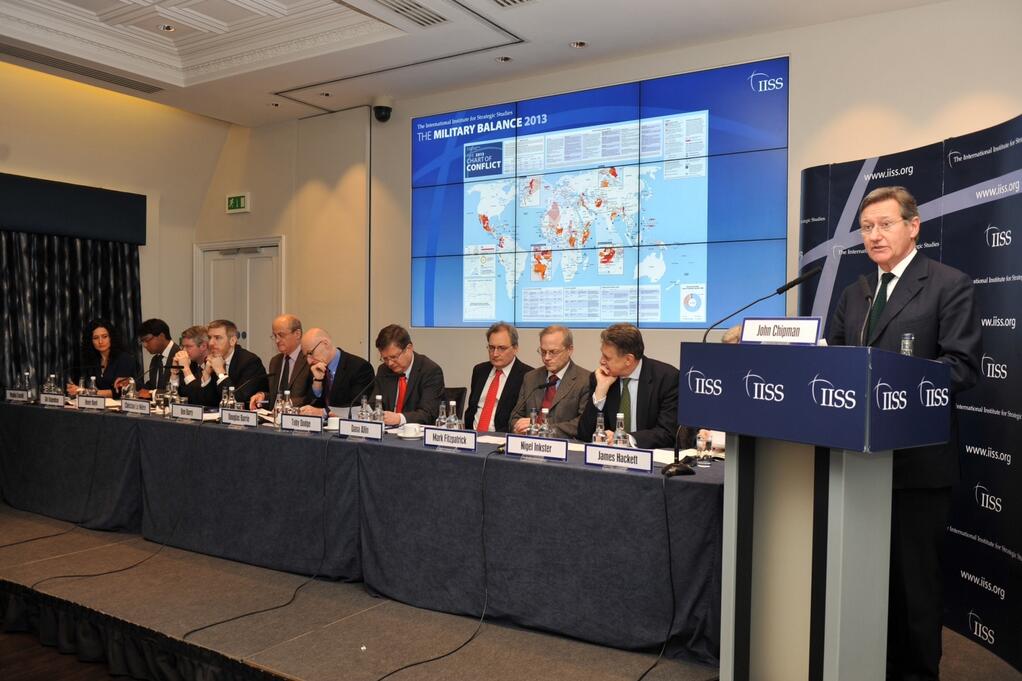
For most governments, in fact, foreign policy has become a mixture of political risk management and trade promotion. Shaping favourably the domestic politics of other countries is still an ambition of the greater powers, but its labour-intensive nature leaves most jobs incomplete. Nation building at home is the announced priority of all those who have in the past embarked on it abroad. The tendency now is for a more defensive foreign-policy approach.
As world politics becomes more global, leadership priorities have become more parochial. There may be a global power shift going on, but the transition will be a long one, and those gaining a greater share of global power have no obvious plan for how they will use it. In that transition, and during that shift, private forces will have more of a say and more of an impact. Public policy responsibilities cannot now fall only on the narrowing shoulders of government. Companies acting abroad need to go beyond corporate social responsibility and develop virtual foreign policies if they are to protect their interests and the environments in which they succeed. The media and NGOs, who are active internationally, are now expected to assume greater responsibility for the impact of their actions. In the age of privatised power, with so many international agencies of power, we are witnessing the privatisation of foreign policy. For states to deliver effective foreign policies for their citizens their approach has to be even more strategic. Given the need to act so quickly nowadays some may think strategic thinking a conceit or a luxury, but its absence can certainly be dangerous. As economic houses are being reconstructed in the West, and quickly being developed in the Middle East, Asia, Africa and Latin America, the need for a strategic perspective has increased.
John Chipman, Strategic Survey 2012 – Press Statement, Londra
15 settembre 2012 - 10:30 am | by Silendo | No Comments »
Tags: affari strategici, classe dirigente, gran bretagna, sicurezza nazionale.
ago
18
Una realtà che gli europei farebbero bene ad accettare, come ben illustra James Rogers:
[...] And this brings us to the crux of the problem: Europeans do not like to think about power. For most Europeans, power is associated with struggle, conflict and war – and thus, with being human. Instead, many Europeans prefer to think themselves above power and strategy, even above being human (insofar as Europeans think of themselves as actually being ‘human’, they have an idealised, even utopian, vision of what being human actually means). This leads them to engage in fantasies over the character of international relations, whereby they develop an ongoing smorgasbord of well-meaning but nevertheless fluffy new concepts like ‘normative power’, ‘effective multilateralism’, ‘inter-polarity’ and – to use the title of the latest paper from the European Union Institute for Security Studies – ‘Citizens in an Interconnected and Polycentric World’ (which is Orwellian doublespeak if ever there was any!).
How can this be changed? Frankly, I am not sure if it can be. But logically, Europeans must realise that the world will continue – should China, India, Turkey, Russia and co. continue to surge (or re-emerge) – to become progressively and determinedly more multipolar, much like early twentieth century Europe after the collapse of British primacy. Then, as increasingly, now, several great powers fiercely protected their interests and competed aggressively to influence not only one another, but also, and perhaps more importantly, the smaller countries in between them. What will matter in this world is the ability to exercise power – power understood not so much as the ability to make other people do things that they might not otherwise want to do (although that is important), but rather as the ability to prevent people from thinking things that they might otherwise be encouraged to think through strategies of disaggregation. It means that Europeans must come to understand – as they did in the past – that the world is not heading towards a liberal conclusion based on the individual or ‘citizens’, but that it will remain a decidedly political place, centred on national ideological groups (no matter how absurd they might often appear to be).
In short, the European Union – and particularly its civil society, both at the European and Member State levels – must engage in a detailed re-examination not so much of how to achieve security, but rather how to undertake political geostrategy, i.e. how we as Europeans might better exercise power over subject areas that are of particular importance to us and our allies. Of course, this includes thinking much harder about how we can resist and combat foreign powers’ own political geostrategic advances, which will become ever more resourceful if those powers continue to grow in relative mass and velocity, even more so if they adopt missionary foreign policies that are incompatible with our own (which they surely will). Consequentially, rather than a new European security strategy, replacing or complementing the European Union Institute for Security Studies with a ‘European Union Institute for Strategic Studies’, which is well-led, considerably larger, better connected with civil society, and stationed and integrated in Brussels, might be a better idea. And the formation of a ‘European Strategic Council’ – integrated with the leading European strategic think tanks and policy institutions, strategists in universities, and, critically, the foreign and defence parliamentary committees, both in Brussels and the capitals of the Member States – might be another.
18 agosto 2012 - 8:44 pm | by Silendo | 8 Comments »
Tags: affari strategici, cina, classe dirigente, francia, germania, gran bretagna, italia, russia, sicurezza nazionale, stati uniti.
ago
11
… da qualche giorno è disponibile l’ultimo numero di Survival, la rivista dell’International Institute for Strategic Studies di Londra.
11 agosto 2012 - 7:26 pm | by Silendo | No Comments »
Tags: affari strategici, cina, cyber-mf, egitto, gran bretagna, guerriglia, nato, siria.
ago
08
8 agosto 2012 - 2:10 pm | by AllegraBrigata | No Comments »
Tags: al qaeda, gran bretagna, intelligence, terrorismo.
ago
04
Mi sostituisco un attimo al nostro padrone di casa per segnalare la recente scomparsa del grande storico militare inglese John Keegan che fu autore di tanti magnifici volumi.

4 agosto 2012 - 8:16 pm | by AllegraBrigata | 6 Comments »
Tags: gran bretagna, libri.
lug
27
E’ stato appena pubblicato dall’Istituto Affari Internazionali di Roma (autori: Alessandro Marrone e Francesca Capano) “Economia e industria della Difesa: tabelle e grafici“, l’edizione 2012 di un utile studio che lo IAI prepara ogni anno e grazie al quale è possibile monitorare l’evoluzione dei bilanci della difesa dei principali paesi europei.
“In tempo di crisi dei bilanci europei“, scrive Alessandro Marrone, coautore dello studio assieme a Francesca Capano, “Francia e Gran Bretagna hanno tagliato le spese per la difesa salvando gli investimenti. La Germania, in controtendenza, ha aumentato la spesa militare, e l’Italia ha destinato alla difesa risorse appena sufficienti ma ripartite in modo squilibrato tra i vari capitoli di bilancio.[...]
In valore assoluto, il taglio maggiore è stato effettuato in Francia, 1,9 miliardi di euro in meno dal 2010 (32,1 miliardi di euro) al 2011 (30,2 miliardi), con una riduzione del 6%. La Spagna ha ridotto la spesa per la funzione difesa del 6,5%, attestandosi su 7,2 miliardi nel 2011, e la Gran Bretagna dello 0,8% rimanendo di gran lunga il primo paese europeo per spese militari con 38,1 miliardi di euro. Al secondo posto la Germania, che aumentando la spesa per la funzione difesa dell’1,3% nel 2011 supera con 31,5 miliardi di euro la Francia. Sostanzialmente stabile nel biennio in esame la spesa per la funzione difesa in Italia, con circa 14,4 miliardi di euro sia nel 2010 che nel 2011, corrispondenti allo 0,9% del Prodotto interno lordo (Pil).[...]
Il bilancio della difesa italiano, in linea con quanto accade nel resto d’Europa, è tendenzialmente impostato su una prospettiva di medio periodo, e difficilmente può subire drastiche variazioni da un anno all’altro. Ciò dipende dalla relativa rigidità dei capitoli di bilancio dedicati rispettivamente al personale e agli investimenti – in quest’ultimo caso concentrati in programmi di acquisizione e ammodernamento di equipaggiamenti della durata pluriennale. Nel corso dell’ultima legislatura, complice la crisi economica e dell’euro, la spesa per la funzione difesa è scesa dai 15,4 miliardi del 2008 ai 14,4 del 2011.
Si prevede inoltre un ulteriore taglio del 5,5% per l’anno in corso, con 13,6 miliardi di euro messi a bilancio per il 2012. In quattro anni, la spesa per la funzione difesa in Italia è dunque diminuita dell’11,6%, senza calcolare l’inflazione, contribuendo in misura ben maggiore di altre voci del bilancio dello stato alla riduzione del deficit pubblico.[...] Per un moderno esercito professionale europeo, in grado di operare pienamente in ambito Nato e di svolgere sia le missioni oggi in corso sia i compiti prevedibili nel prossimo futuro, il modello ottimale vedrebbe metà delle spese destinate al personale, un quarto agli investimenti ed un quarto all’esercizio. È quanto fatto dall’Italia nel triennio 2002-2004, quando la spesa per il personale era circa il 48-53% della funzione difesa, quella per gli investimenti il 23-26%, e quella per l’esercizio 24-26%. Verso tale modello tendono i principali paesi europei: nonostante i suddetti tagli alla difesa, nel 2011 Gran Bretagna e Francia hanno speso ciascuno circa 10,7 miliardi di euro per investimenti, stanziamenti in linea con il 2010: rispettivamente il 28,1% e il 35,4% dei rispettivi bilanci della difesa.
La composizione della spesa italiana per la funzione difesa nel 2011 ha visto invece il 65,9% delle risorse andare al personale, il 24% agli investimenti e solo il 10,1% all’esercizio. Situazione in peggioramento nel 2012, anno in cui si prevede ben il 70,6% della spesa per la funzione difesa destinata al personale, mentre soltanto il 18,2% andrebbe agli investimenti e l’11,2% all’esercizio. [...]“
Economia e Industria Della Difesa 2012
27 luglio 2012 - 10:41 pm | by Silendo | 3 Comments »
Tags: difesa, francia, germania, gran bretagna, italia.
lug
22
22 luglio 2012 - 11:00 pm | by Silendo | 3 Comments »
Tags: gran bretagna, hezbollah, intelligence, iran, israele, terrorismo.
lug
17
Da un paio di giorni è stato pubblicato il report annuale dell’Intelligence and Security Committee, l’equivalente del Copasir.
In attesa di leggere la relazione del nostro Comitato parlamentare (dovrebbe essere pubblicata a breve) può essere utile dare un’occhiata al corposo documento britannico (si veda, ad esempio, la parte dedicata alle Resources, da pag. 57 in poi).
Tra i vari temi affrontati (la capacità di previsione e di adattamento dell’Intelligence britannica nelle recenti crisi arabe, la questione cyber, i tagli ai fondi, ecc…) segnalo la valutazione delle conseguenze dell’istituzione del National Security Council per il sistema di intelligence (da pag. 9). In particolare per quanto riguarda la capacità di direzione strategica, coordinamento, “Requirements and Priorities“.
The Intelligence and Security Committee’s Annual Report for 2011-2012
17 luglio 2012 - 7:17 pm | by Silendo | 1 Comment »
Tags: gran bretagna, intelligence.
lug
14
14 luglio 2012 - 9:32 am | by AllegraBrigata | 1 Comment »
Tags: gran bretagna, intelligence, iran, nucleare e risorse energetiche.
lug
07
7 luglio 2012 - 3:22 pm | by Silendo | 1 Comment »
Tags: affari strategici, gran bretagna.